


Here's an article I published on LinkedIn earlier this year, that is the foundation of LESSONS LEARNED to LESSONS APPLIED and is so relevant to any CEO or corporate leader who is faced with a critical decision that results in fateful outcomes impacting products, shareholders, and lives...
NASA’s Starliner Reckoning: What Challenger and Columbia Still Teach Us About Leadership Risk
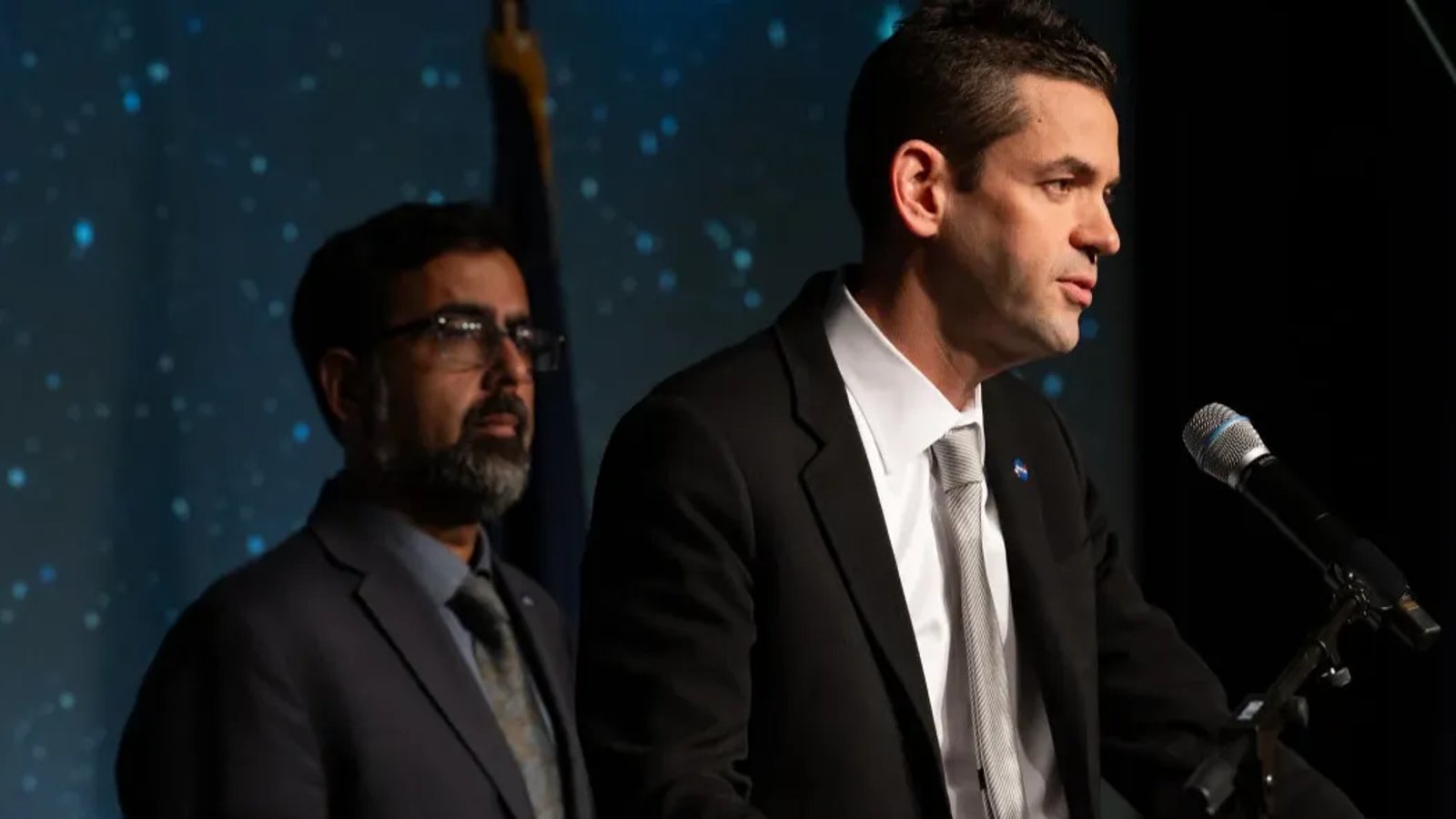
The most important lesson from NASA’s Starliner Crew Flight Test is not about propulsion systems or spacecraft design. It is about decision-making. In a candid February 19, 2026, news conference, NASA Administrator Jared Isaacman confirmed that the 2024 Boeing Starliner mission has been formally classified as a Type A mishap, the agency’s highest category of failure. The designation places Starliner alongside Challenger and Columbia in one critical respect: the underlying risk was not purely technical. It was also organizational. Starliner was intended to be an eight-to-fourteen-day test flight. Instead, propulsion anomalies, helium leaks, and loss of six degrees of freedom control during rendezvous forced NASA to return astronauts Butch Wilmore and Suni Williams to Earth months later aboard a SpaceX Crew Dragon after a 286-day stay in orbit. Isaacman’s assessment cut directly to the core issue: the most troubling failure revealed by the investigation was not hardware, but leadership decisions that risked creating a culture incompatible with human spaceflight. For anyone who has studied Challenger in 1986 or Columbia in 2003, the pattern feels familiar. Technology has evolved. The organizational pressures have not.
The Persistent Temptation to Normalize Risk
Starliner echoes earlier tragedies not because the outcomes were the same, but because the warning signs were. In Challenger, engineers raised concerns about O-ring performance in cold temperatures. Launch proceeded anyway under schedule pressure. During Columbia, a foam strike was observed and ultimately dismissed as a maintenance issue rather than a mission-ending risk. Both cases reflected normalization of deviance, the gradual acceptance of anomalies that should have triggered deeper scrutiny. The Starliner investigation describes a similar trajectory. Thruster issues and helium leaks had appeared during prior uncrewed flights, yet root causes remained only partially understood. Qualification testing gaps were accepted through risk matrices rather than resolved through deeper engineering validation. During rendezvous with the International Space Station, five Reaction Control System thrusters failed offline. Flight controllers and crew recovered control through extraordinary troubleshooting, but the investigation details defensive, unhealthy, contentious meetings where dissenting technical views were sidelined and programmatic goals influenced decision thresholds. This is the leadership pattern that matters: when schedules tighten and reputational stakes rise, organizations often shift from proving a system is safe to asking teams to prove it is unsafe. That inversion has appeared before, and history shows where it leads. Isaacman himself stated, "First, NASA’s limited-touch acquisition and management posture left the agency without the systems knowledge and development insight required to confidently certify a human-rated spacecraft, and insight versus oversight was not applied consistently. "Insight versus oversight has long been a tension in complex programs. When that balance shifts too far, independent technical authority weakens, even in organizations built around safety. These are not isolated hardware failures. They are recurring cultural signals that demand attention long before tragedy forces change.
What Makes Starliner Different
Despite the parallels, Starliner also represents a fundamentally different era of human space flight. Challenger and Columbia were operational missions without viable backup systems. Starliner was explicitly a test flight within a commercial program designed with redundancy. When propulsion risks grew unacceptable, NASA pivoted to SpaceX Crew Dragon, an option that did not exist during the shuttle era. The spacecraft itself returned autonomously to White Sands without loss of life. The agency’s recent response signals the potential for future evolution. Rather than continuing to minimize the incident, the newly appointed NASA leadership reclassified the mishap. Isaacman emphasized the professionalism of controllers and crew, directing focus toward systemic lessons rather than individual blame and publicly promised leadership accountability. Critically, Starliner exposed vulnerabilities without the irreversible human cost that forced wholesale cultural overhaul after 1986 and 2003. This creates an opportunity to act proactively rather than reactively. Starliner shows that many safety improvements since Columbia are real. It also shows that organizational pressures have not disappeared simply because the architecture has changed.
Leadership Lessons for a Commercial Spaceflight Era
Commercial partnerships introduce new dynamics that require renewed discipline. The investigation highlights uneven insight into contractor development, selective data sharing, and blurred authority lines across programs. These challenges are not unique to Starliner. They are structural features of a spaceflight ecosystem that now blends government oversight with private industry timelines. Three leadership lessons stand out...
1. Mishap classification must remain uncompromising
Initial hesitation to categorize the event as a Type A mishap reflected concern for reputation rather than pure safety culture. Isaacman’s decision to reclassify it restores clarity, but the process itself reveals how easily organizational narratives can influence risk framing.
2. Technical insight cannot be optional
Limited-touch acquisition strategies may accelerate innovation, but they also reduce the agency’s visibility into design tradeoffs. High-reliability organizations require deep understanding, not just contractual oversight.
3. Dissent must remain structurally protected
The investigation’s description of contentious meetings and sidelined perspectives mirrors patterns identified after Challenger. Authority structures that make it harder to elevate concerns quietly increased risk tolerance across the system.
These lessons extend far beyond Starliner. Artemis missions, deep-space exploration, and future commercial partnerships will all operate under similar pressures. The question is not whether anomalies will occur. It is whether leaders create conditions where anomalies trigger decisive action rather than incremental accommodation.
The Path Forward
Starliner did not become another Challenger or Columbia, but it carried the same DNA of decision-making risk. That distinction matters. Organizations rarely get many opportunities to learn at this scale without irreversible loss.
NASA now faces a choice familiar to every high-reliability enterprise. Will this investigation become another report archived after temporary reforms, or will it reshape governance in a lasting way
Breaking the cycle requires more than technical fixes. It requires reinforcing independent technical authority, embedding speak-up mechanisms deeply into commercial partnerships, and maintaining a default posture of proving safety rather than negotiating risk acceptance.
Human spaceflight will always operate at the edge of engineering possibility. The universeis unforgiving. Leadership processes must be even less forgiving of unexplained anomalies.
The Starliner moment is not just a spacecraft investigation. It is a reminder that culture, not hardware, ultimately determines whether lessons from history remain alive or slowly fade into repetition. For the sake of future crews and future space missions, it must be the former.
About the Author
Mike Ciannilli is a veteran aerospace leader with extensive expertise in human spaceflight safety and mishap investigation. He serves as a keynote speaker, media commentator, and NASA consultant focused on translating historical safety lessons into modern operational leadership.
Preventing failure in complex space missions through disciplined decisions and lessons applied. https://preventfailure.com
If you are interested in booking Mike Ciannilli for your speaking event or for a film/ television consult, click the BOOK MIKE link at the top of the webpage. I'd love to chat with you to see how I can help with your goals.